Oriental Bittersweet Services
Helping people & native vegetation thrive in New England landscapes.
Our Proven Eradication Process
1.Property Asssessment
With no cost to you, one of our licensed specialists will meet with you on your property to evaluate your goals, your eradication needs and provide a Oriental bittersweet treatment plan with a straightforward quote.
2. Targeted Treatment
Once you approve the Oriental bittersweet treatment plan, we implement a strategic 2 treatment approach, designed to eliminate Oriental bittersweet at the root. Areas we treat will be Oriental bittersweet free.
3. Guarantee
Our Oriental bittersweet treatment plans are backed by a one-year written guarantee.
If live Oriental bittersweet returns in areas we treat, within that period, we will come back and eradicate it at no additional charge.
4. Rescan Program
Following the one-year guarantee, properties with Oriental bittersweet along their boundaries can participate in our Annual Rescan Program… safeguarding your property and landscape.
Decades of Experience
Our work reflects decades of field experience, environmental knowledge, and exceptional customer care all supported by our written one-year Oriental Bittersweet eradication guarantee. Our applicators take special care around valued vegetation, understanding the time, care and resources our clients have invested in their landscapes.
What is Oriental or Asiatic Bittersweet
Oriental bittersweet (Celastrus orbiculatus) is a fast-growing invasive vine that spreads aggressively throughout forests, fields, and residential landscapes in the northeastern United States. Introduced from Asia in the 1800s for ornamental use, it has since escaped cultivation and become a major ecological threat.
Why Cutting Alone Doesn't Work
Simply cutting bittersweet vines rarely solves the problem. The plant quickly resprouts from its extensive root system, often leading to thicker infestations the following season. To destroy the plant, you have to destroy the root.
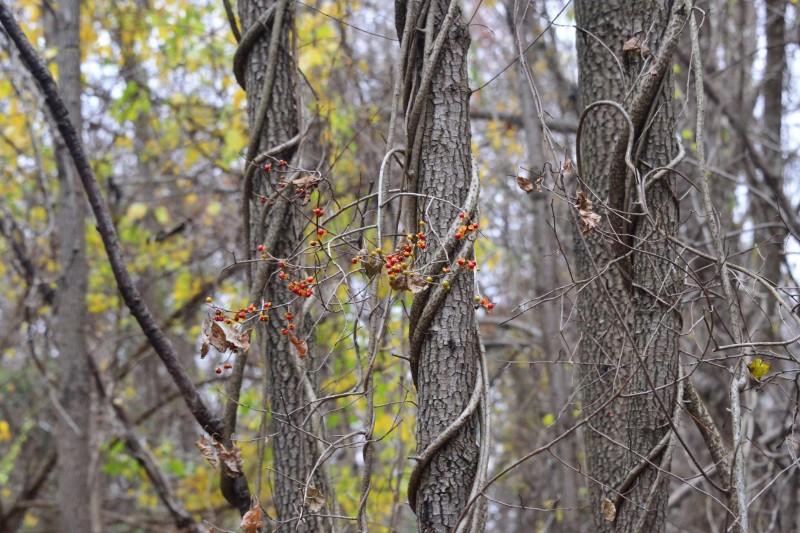
From the view of the trunks, you see how the vines of Oriental bittersweet wrap around trunks and slowly strangle them. This contributes to the tree’s weakening and ultimate demise.
Native plants support complex food webs that support native plants and animals;
invasive species often do not.
The Threat to Trees & Property
As bittersweet vines climb into tree canopies, they grow and expand. This adds weight and constricts tree trunks.
Over time this can weaken trees and increase the risk of falling limbs or tree failure which can damage homes, fences or other property.
Ecological Impact
Oriental bittersweet (Celastrus orbiculatus) is one of the most destructive invasive vines affecting forests and landscapes in the northeastern United States. Its aggressive growth allows it to quickly spread across forest floors and climb into the canopy, where it competes intensely with native vegetation for sunlight, nutrients, and space.
As the vine grows, it wraps tightly around trees and shrubs, a process known as girdling, which can restrict the flow of water and nutrients within the plant. Over time, the vine’s increasing weight and twisting growth can weaken branches, deform trunks, and in many cases cause trees to fall during storms or under heavy snow. Young trees and saplings are especially vulnerable, often being overtaken before they can mature.
Oriental bittersweet also forms dense ground cover that suppresses native plants and prevents the regeneration of tree seedlings and understory vegetation. This reduction in plant diversity can alter the structure of forest ecosystems and reduce habitat quality for insects, birds, and other wildlife that depend on native plant communities.
Because its bright berries are readily eaten and dispersed by birds, oriental bittersweet spreads rapidly across the landscape. Over time, infestations can transform diverse forests and natural areas into vine-dominated systems, weakening forest health, reducing biodiversity, and disrupting the long-term stability of native ecosystems.
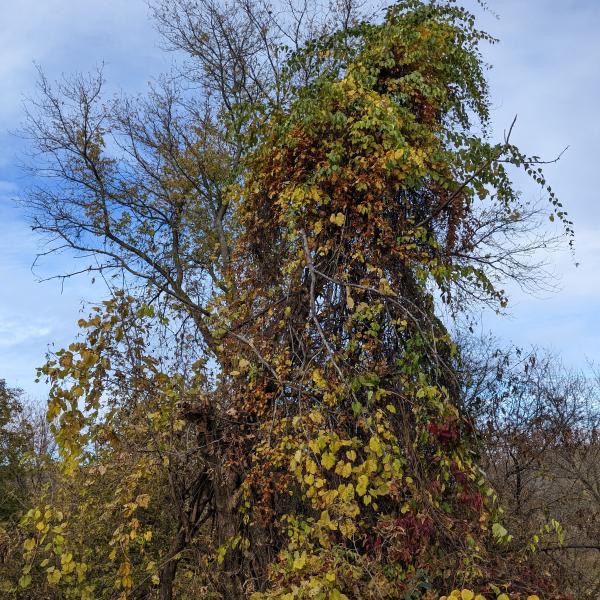
From the outside, you see Oriental bittersweet covering the shrubs and trees, robbing them of sunlight and competing for water and soil nutrients. Overtime this weakens the trees and makes them sickly.
More About Oriental or Asiatic Bittersweet
The Berries of Oriental Bittersweet
Oriental bittersweet produces bright orange berries enclosed in yellow husks that split open in the fall. Because the colorful vines are often used in decorative wreaths and crafts, the berries have been widely spread beyond their original planting areas.
These berries are a key reason the invasive vine spreads so aggressively, as birds eat the fruit and disperse the seeds across forests, yards, and roadsides, and as people take the vines elsewhere for decorative purposes, the seeds are spread throughout Massachusetts, New England and beyond.
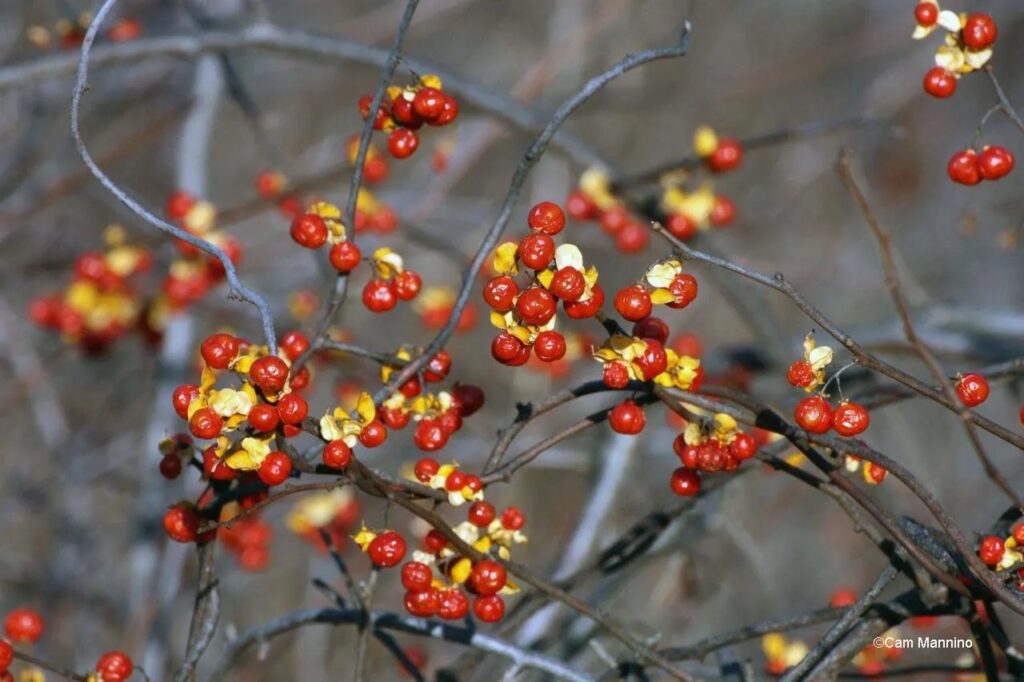
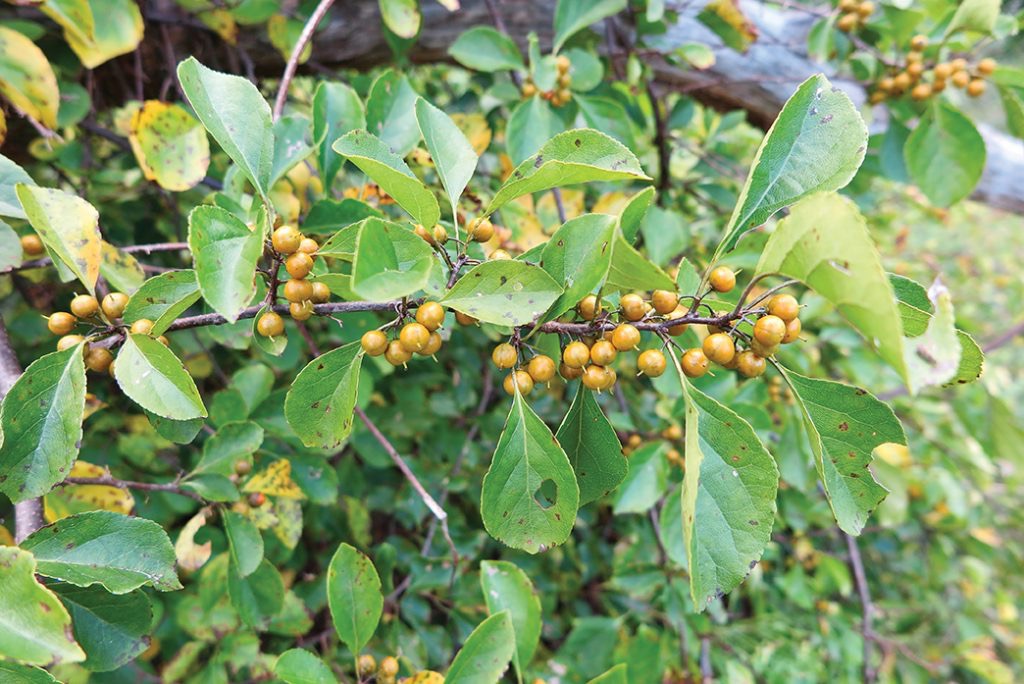
Invasive Oriental Bittersweet Vs. Native American Bittersweet
While Oriental bittersweet is an aggressive invasive plant in Massachusetts, there is also a native species of bittersweet known as American bittersweet. The two vines look similar, but several characteristics help distinguish them.
Berry Location:
-
-
Oriental bittersweet produces orange berries with yellow husks along the entire length of the vine at the leaf joints.
-
American bittersweet produces berries only at the ends of branches.
-
Leaf Shape:
-
-
On mature growth, Oriental bittersweet typically has rounder, broader leaves.
-
American bittersweet has more elongated leaves that taper toward the tip.
- However, on new growth of Oriental bittersweet, leaves can appear more elongated and tapered toward the tip though smaller then American bittersweet. The best way to tell the difference is the placement of the berries.
-
Growth Habit:
-
-
Oriental bittersweet grows very aggressively, climbing trees and overtaking surrounding vegetation.
-
American bittersweet grows more moderately and typically does not overwhelm nearby plants.
-
Impact on Trees:
-
-
Oriental bittersweet can strangle trees, weigh down branches, and contribute to tree failure.
-
American bittersweet rarely causes structural damage to trees.
-
Presence in Massachusetts:
-
-
Oriental bittersweet is very common and widely invasive throughout Massachusetts.
-
American bittersweet is native but now relatively uncommon in many areas due to competition from the invasive Oriental bittersweet.
-
Oriental bittersweet with berries along the vine
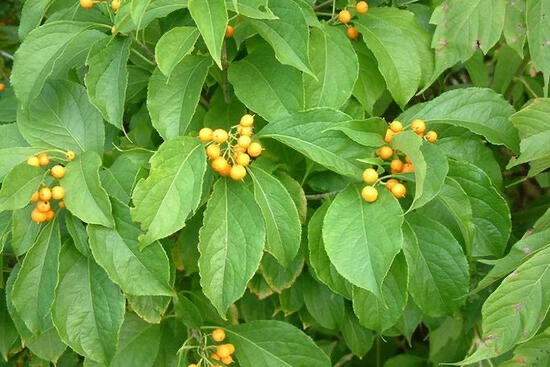
American bittersweet with berries at the tip
Why Root-Level Treatment Matters
Many invasive species, like Oriental bittersweet spread through underground rhizomes or root systems. Cutting, smothering or mowing alone rarely eliminates the problem and requires labor intensive strategies. Mechanical removal (digging up the plant or pulling it by hand) typically leaves behind root fragments that can regrow into infestations.
Effective management requires treatment that reaches and destroys the plant’s root structure.
Proper identification, timing, and application method are critical to achieving long-term control while minimizing environmental impact.
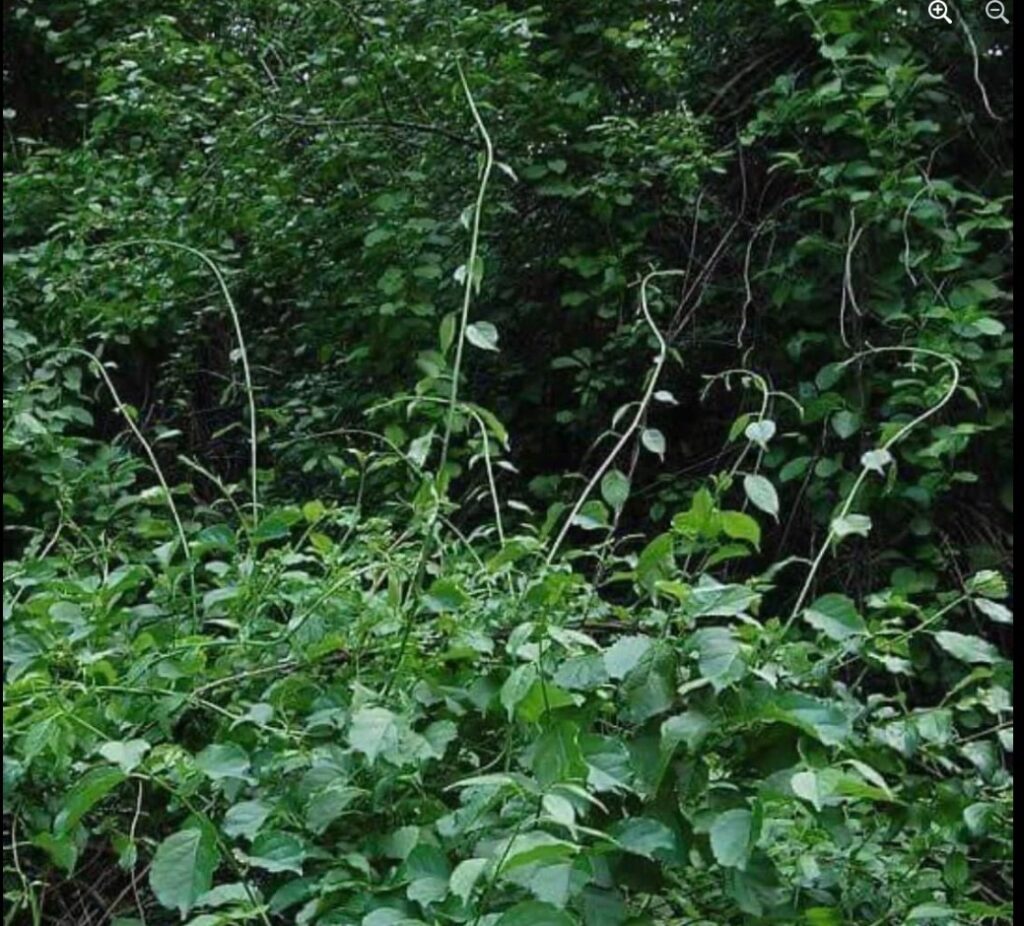
Young Oriental bittersweet tendrils reaching for branches to climb up on
With responsible vegetation management, we can take action against invasive plants and help give native New England landscapes a new horizon.

Decades of Experience
We’ve been serving Boston Metro West since 2000.
No Job Too Big or Small
From golf courses to tiny garden patches, we can handle it!
Licensed and Insured
We are fully licensed and insured in Massachusetts
Areas We Serve
We specialize in removing or eradicating garlic mustard, Asiatic bittersweet, Norway maple, autumn olive, black swallow-wort, multiflora rose, porcelain berry and Japanese barberry throughout Massachusetts, including the towns of Acton, Amesbury, Andover, Arlington, Bedford, Beverly, Billerica, Boxford, Burlington, Carlisle, Chelmsford, Concord, Georgetown, Gloucester, Groton, Harvard, Haverhill, Holliston, Hudson, Ipswich, Kensington, Lancaster, Leominster, Lexington, Littleton, Lunenburg, Methuen, Newbury, Newburyport, North Andover, North Reading, Pepperell, Reading, Rowley, Stoneham, Topsfield, Townsend, West Newbury, West Townsend, Westford, Weston, Wilmington, Winchester, Woburn and other surrounding towns.
We also specialize in removing or eradicating garlic mustard, Asiatic bittersweet, Norway maple, autumn olive, black swallow-wort, multiflora rose, porcelain berry and Japanese barberry in the counties of:
- Barnstable County, MA
- Bristol County, MA
- Middlesex County, MA
- Norfolk County, MA
- Plymouth County, MA
- Worcester County, MA
Our work reflects decades of field experience, environmental knowledge, and exceptional customer care, all supported by our written one-year Oriental bittersweet eradication guarantee.

Seeking to help people and native vegetation thrive in New England landscapes.
Our Contact Info:
Office Phone: (978) 401-9675
Email: [email protected]
Feel free to contact us with any questions about our services.